Public Transport in Malaga Hacks: €1.40 Bus Tickets & Secret Routes
Malaga offers an extensive and well-integrated public transport system that makes exploring this beautiful Spanish city convenient, affordable, and stress-free. Whether you're a tourist visiting for a few days or planning an extended stay, understanding how to navigate Malaga's buses, metro, and commuter trains will significantly enhance your experience. This guide will help you choose the right tickets, understand how transfers work, and avoid common mistakes—so you can move around confidently like a local.
Table of Contents
🚏 Quick Reference Table: Malaga Public Transport Tickets
Note: Public transport prices and timetables can change. For anything time-sensitive (airport connections, early/late services, holiday schedules), always double-check the official operator pages linked below.
| Ticket Type | Price | Validity | Where to Buy |
|---|---|---|---|
| Single EMT Bus Ticket | €1.40 | 1 bus ride, no transfer | On bus |
| EMT Multiviajes (10 rides) | €4.20 (recharge) | 10 rides; transfer rules depend on the card type | Sales network / EMT options (see EMT website) |
| Metro “Occasional” (single) | €1.35 (check official fares) | 1 metro ride | Metro station machines |
| CTMAM (Consortium) Travel Card | €1.50 handling fee + top-up (min €5) | Multi-modal; discounted fares; supports transfers (rules apply) | Authorized sales points, metro stations |
| Cercanías (Renfe) Ticket | Varies by route/zones (check Renfe) | Valid for your selected journey | Station machines, Renfe channels |
Overview of Malaga's Public Transport Network
Malaga’s public transport network is built around three main modes: EMT Málaga city buses, the Malaga Metro, and Renfe Cercanías commuter trains. Together, they cover most tourist areas, major transport hubs, and popular day-trip connections along the Costa del Sol.
In practice, most visitors use EMT buses for short trips around the city, the metro for faster cross-city hops (where it fits your route), and Cercanías for airport transfers and nearby coastal towns. The key to saving money is picking the right ticket type early—especially if you plan to take multiple rides per day.
Key Transport Providers:
- EMT Málaga: The municipal transport company operating the city's bus network.
- Metro de Málaga: The metro/light rail system (official fares and updates).
- Renfe Cercanías: Commuter trains for the airport, coastal towns, and some inland connections.
🚌 The EMT Bus System
EMT buses are the workhorse of Malaga’s public transport. They reach areas the metro doesn’t, and they’re often the easiest way to connect the historic center with beaches, museums, and residential neighborhoods.
Network Coverage and Routes
Rather than memorizing routes, the easiest approach is to use EMT’s official real-time tools and a map app: search your destination, check the next arrivals, and follow the live vehicle updates. For visitors, this is more reliable than relying on printed timetables (which can differ on weekends and holidays).
To help navigate, refer to EMT’s official route information and real-time arrivals here: EMT Málaga (routes + real-time info).
Tickets and Fares
- Single Tickets:
Cost: €1.40 per journey
Purchase: On the bus
Valid only for one ride (no transfers) - Multiviajes (10 rides):
10-ride recharge: €4.20
Best for: Visitors who plan to ride EMT several times across 1–3 days
Tip: Transfer eligibility depends on the specific card system you’re using (see the EMT transfer rules below). - Monthly Pass (EMT “Recarga mensual”):
Cost: €19.95
Best for: Longer stays where you’ll ride almost daily
Transfers (important): EMT explains how transfers work under its “Transbordo” rules, including key limitations such as not being able to transfer on the same line and special restrictions for the airport line.
Where to Buy / Reload EMT tickets: EMT lists several official channels (including its customer service and sales network, plus digital options). Because sales points can change over time, it’s best to use EMT’s official info pages rather than relying on a fixed list in a blog post.
How to Use EMT Buses
- Boarding: Wait at a designated stop and signal the approaching bus.
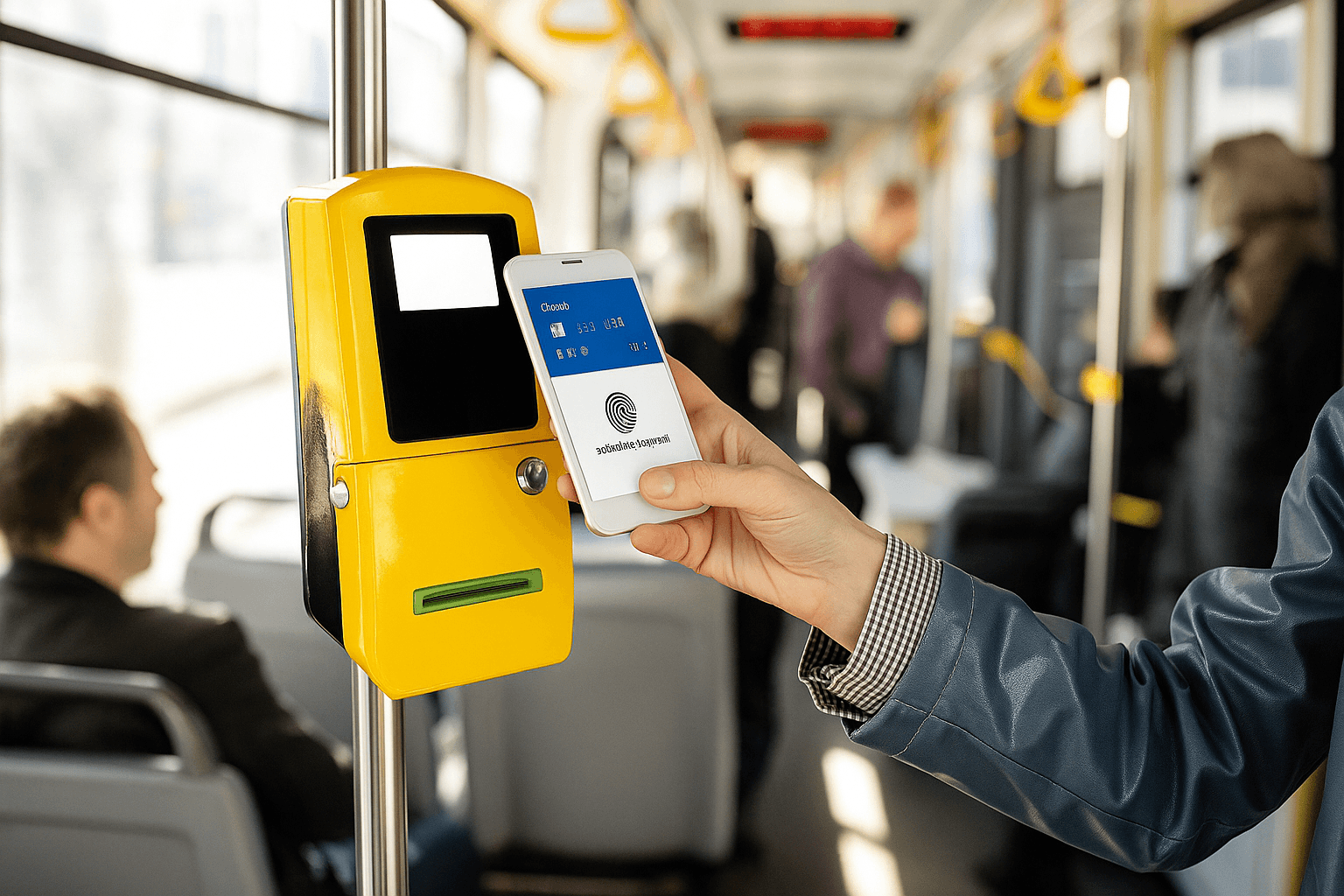
- Payment Methods: EMT states you can pay in cash, by bank card, or by QR (depending on the service setup).
- Cash tip: EMT indicates they do not accept banknotes above €5 on board.
- Requesting stops: Press the stop button before your destination.
- Etiquette: Locals queue; if you’re unsure, “¿Último?” (“who’s last?”) is the standard way to join properly.
App for Route Planning: EMT’s official pages are the safest reference for live arrivals and route info, especially if you’re visiting during holidays or a major event.
🚇 Malaga Metro Tickets & System
Malaga’s metro is useful when it matches your route: it can be faster than buses during busy traffic hours and is generally straightforward (stations, gates, ticket machines). For the latest maps, service notices, and fares, use the official Metro de Málaga website: Metro de Málaga (tickets & fares).
Lines, Stations & How It Works
The safest way to plan a metro journey is to look up your origin/destination in Google Maps and then verify any service changes on the official site (maintenance and weekend variations happen). If you’re connecting between EMT, Metro, and Cercanías, keep in mind that the simplest “tourist-friendly” hub strategy is to start from the city’s central areas and main stations, then branch out.
Types of Malaga Metro Tickets
- Occasional Ticket: €1.35 per trip (single)
- Reloadable / Travel-card fares: Discounted fares exist via cards (including consortium options), and they’re usually the best choice if you’ll use metro multiple times.
Where to Buy: Use ticket machines at metro stations for metro tickets and card-based travel options.
More info: Metro de Málaga official website.
🚆 Renfe Cercanías (Commuter Trains)
Renfe Cercanías is the most convenient option for many airport transfers and several popular nearby destinations. It’s also a good “plan B” when the road network is congested, because trains keep their own right-of-way.
Lines and Destinations
- Common tourist use case: Airport ↔ city (fast, simple, luggage-friendly).
- Coastal connections: Useful for towns along the Costa del Sol (check the specific line and stops on Renfe).
Timetables: Frequencies and first/last trains vary by day and season, so treat any blog timetable as a rough guide and verify on Renfe before you travel.
Tickets and Fares
Prices: Cercanías fares depend on your origin/destination (zones/route). The best practice is to check the fare when you buy at the station machine or via Renfe’s official channels.
- At Stations: Buy tickets at ticket offices or self-service machines.
- Contactless (Cronos): Renfe describes a contactless system where you validate at the origin station and at the destination; if you don’t, it may charge the full amount for all zones.
- Using the CTMAM travel card with Renfe: The consortium card can be used to purchase certain Renfe suburban tickets from machines inside stations (see CTMAM travel card details).
More info: Renfe Cercanías Málaga.
🔄 Integrated Transport Solutions
If you’re staying more than a couple of days or you plan to mix bus + metro + regional transport, integrated ticketing can save money and reduce hassle. In Malaga’s metro area, the key product to know is the consortium travel card (CTMAM), which can be used across multiple transport modes and supports transfers under defined rules.
Transport Consortium Card
The CTMAM travel card is a rechargeable, multi-modal card designed for Malaga’s metropolitan transport. CTMAM states it can be used on metropolitan buses, certain local buses, the metro (Malaga/Seville/Granada), and to purchase Renfe suburban tickets from station machines.
Card cost and top-ups: CTMAM states the card has a €1.50 handling fee when purchasing, a minimum top-up of €5, and a maximum balance limit of €500.
Multi-validation (great for groups): CTMAM states up to 15 passengers can pay with the same card if validations are done within 3 minutes of the first one.
Transfers: CTMAM explains that journeys may be split into stages, and later stages count as a transfer if conditions are met (time limit, not repeating the same bus line, not exceeding configured hops, and other rules).
Free transfers on EMT (important update): CTMAM explicitly states that transfers between EMT city buses are free from the second stage onwards within one hour from the beginning of the first EMT stage.
CTMAM fares (2026): CTMAM publishes an official fare table for “Ordinarias (del 1 de febrero al 31 de diciembre de 2026)”, including single tickets and travel-card fares by “saltos”, plus transfer-time limits. If you want to keep a blog-friendly summary without drowning readers in tables, use the official page as your reference and present only the most common case (0–1 salto) + a link.
Example from the official CTMAM 2026 table (for orientation only):
- With the CTMAM travel card, “0 saltos” first stage is listed as 0,62 € (Bus/Tren) and 0,49 € (Metro).
- Transfer times are listed by “saltos” (e.g., 50 minutes for 0 saltos, 70 minutes for 1 salto, etc.).
Special fare: Airport Express — CTMAM’s fare page lists a special entry for the EMT Airport Express (“Paseo del Parque - Aeropuerto (Expres)”) showing 4,00 € on the travel card and stating that transfers are not allowed on this route.
✈️ Getting To and From Malaga Airport
Most travelers reach the city center from Malaga Airport either by Renfe Cercanías (train) or by the EMT Airport Express bus. The “best” option depends on where your accommodation is: if you’re staying near a train-accessible area or a central station, the train is usually fastest; if you prefer a direct bus to the central boulevard area, the Airport Express can be convenient.
Commuter Train (Cercanías):
- Buy tickets at station machines, or use Renfe’s contactless Cronos system (remember: validate at origin and destination).
- Timetables vary by day; confirm on Renfe before you travel.
Airport Express Bus (Line A):
- Ticket price: €4.00
- Transfers: Not allowed on this route according to CTMAM’s published rules for the Airport Express fare entry.
- Timetable/frequency can change—use the official EMT Airport Express page for live schedules and updates: EMT “Línea Express Aeropuerto”.
For more details, check our full guide on how to get from Malaga Airport to the city centre.
🗺️ Example Journey: Malaga Airport to City Center
Scenario: You’ve just landed at Malaga-Costa del Sol Airport and want to reach the city center (Alameda Principal or María Zambrano station).
Option 1: Renfe Cercanías Train (Recommended)
- Follow signs for “Tren” (Train) in the airport.
- Buy a ticket at the station ticket machine or use Renfe’s supported payment methods (see the official Renfe page for details).
- Validate correctly if using contactless Cronos: Renfe explains you must validate at the origin and at the destination to avoid being charged the full amount for all zones.
- Get off at your most convenient stop for the center, then walk or connect to EMT/metro for the last segment.
Tip: If you’re tired after landing, the easiest workflow is: buy ticket → follow platform signs → keep your ticket accessible until you exit at the destination. For timetables, always check Renfe close to your travel time.
Option 2: EMT Airport Express Bus (Line A)
- Exit arrivals and find the Airport Express stop.
- Buy your ticket (the airport bus fare is €4.00).
- Check the live timetable: schedules can vary, so use EMT’s official Airport Express page before you rely on a fixed “first/last bus” plan.
- Get off in the central area and walk or connect to other services.
Tip: If you’re using the CTMAM travel card, note that CTMAM lists the Airport Express as a special fare where transfers are not permitted.
💡 Tips for Tourists
- Short stays (1–3 days): Single EMT tickets can be simplest for occasional rides; if you’ll take many buses, a multiviajes product is usually better value.
- Longer stays (4+ days): Consider an EMT monthly recharge (€19.95) if you’re bus-heavy, or the CTMAM travel card if you’ll mix modes and want transfer functionality.
- If you travel as a group: The CTMAM travel card supports multi-validation for up to 15 passengers within 3 minutes, which can be very convenient for families/friends.
- Don’t over-trust fixed timetables in blog posts: Use official pages for airport services and holiday periods—those are the most likely to change.
- Keep payments smooth: EMT states it won’t accept banknotes above €5 on board, so carry coins/small notes or use card/QR where available.
- Understand transfers before you rely on them: EMT and CTMAM both publish transfer rules and exceptions (including restrictions like not transferring on the same bus line and special handling for airport services).
- Accessibility: Metro systems and modern buses are generally accessible, but if accessibility is critical for your trip, confirm on the operator’s official info pages before you travel.
Common money-saving pattern (simple and reliable): If you’ll mostly stay inside the city, EMT-focused tickets are often enough. If you’ll combine city + metro + suburban/regional travel, the consortium card becomes more attractive—especially because it’s designed around multi-stage journeys and transfers.
❓ Quick FAQ: Using Public Transport in Malaga
Q: Can I bring luggage on buses and trains?
A: Generally yes, as long as it doesn’t block aisles or doors. For airport trips, trains and the Airport Express bus are commonly used with luggage.
Q: Can I pay with a bank card / phone?
A: EMT lists multiple payment methods including cash, bank card, and QR (availability can depend on the service setup). Renfe also describes a contactless system (Cronos) with required validation at both origin and destination stations.
Q: What’s the biggest “gotcha” with transfers?
A: Transfers have rules and exceptions. EMT’s own transfer page explains key limitations (for example, not transferring on the same bus line and exceptions tied to specific services), and CTMAM publishes detailed stage/transfer logic and time limits.
Q: Where can I get help or lost property?
A: Use official operator contact channels (EMT / Renfe / Metro) depending on where you lost the item. EMT provides customer service information on its site.
🌍 Conclusion
Malaga’s public transport is affordable and practical, and it lets you explore more without needing a car. With a little planning—especially around which ticket type to use and how transfers work—you can move around the city smoothly and avoid the common “tourist traps” of time wasted and unnecessary taxi rides.
Before you go, always check up-to-date timetables—especially for airport services and holidays. EMT, Renfe, Metro de Málaga, and CTMAM all publish official pages that are more reliable than any fixed timetable inside a blog post.
Planning Your Malaga Trip?
Check out our complete travel guide for more insider tips and recommendations.